


End-To-End Adventure Rental Platform For The Outdoors
I used to live in a studio in SF downtown. No car, no storage, no gear. Before the trip even starts, I am already exhausted.
Gear & Car rentals, Food, Packing & Unpacking. Permits. Reservations…∞
Concordia was our answer: a fully equipped vehicle delivered to your door, ready to take you from downtown SF to the wilderness! No planning, no hauling, no stress.
I conceived the B2C + B2B model and led UI/UX across every touchpoint: Harmony AI app, car dashboard, AR HUD, AR sunroof, and post-trip photobook.
Concordia is an In-Vehicle Infotainment system designed for Level 3 to Level 4 autonomous vehicles in 2030. The goal wasn't to add more screens. It was the opposite. We wanted to reduce screen time and help people connect with nature and each other without digital barriers.
Role
Product Design & Management Lead
Tools
Figma, Figma Make, Cursor AI, Google Stitch, Veo3, Adobe Photoshop, Adobe Illustrator
Team
Industrial Design, Interior Architect, Product Design
B2C + B2B business model
Harmony AI mobile app
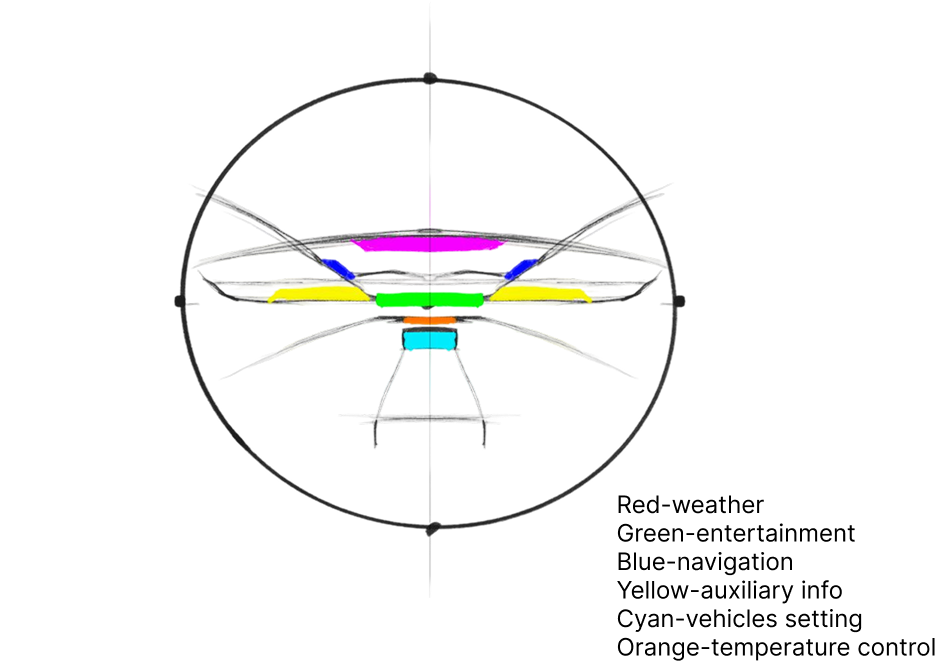
Dashboard UI
AR windshield HUD
AR sunroof
Timeline
14 weeks
My Output
Problem
As a person living in downtown San Francisco, a weekend in the mountains shouldn't require a car, a garage full of gear, and a free weekend to plan it all. But in a city apartment, it does.
I built the case on two tracks. These two research tracks became the basis for every design decision that followed.
Research
I surveyed 20 people living in major U.S. cities, holding a U.S. driver's license, and interested in outdoor activities. Even people already drawn to this lifestyle weren't going as often as they wanted. The top frustrations were cost uncertainty, difficulty finding the right vehicle, and packing/storing gear. One finding stood out: trust in autonomous driving. Multiple respondents worried about the car's judgment off-road and whether they could manually intervene in an emergency.
Primary Research: User Survey
Secondary Research: Academic Literature
I reviewed a study on information systems for autonomous vehicle passengers. The core finding: no single interface solves this.
In group settings, a conversational agent that spoke first (proactive utterances) was seen as intrusive. Groups ignored the AI, talked among themselves, then issued a command.
The Windshield Display, on the other hand, was preferred by groups as a "shared information space" for making decisions together.
Across all autonomy levels, "vehicle status information" ranked as the most wanted information type, followed by nearby restaurants and weather.
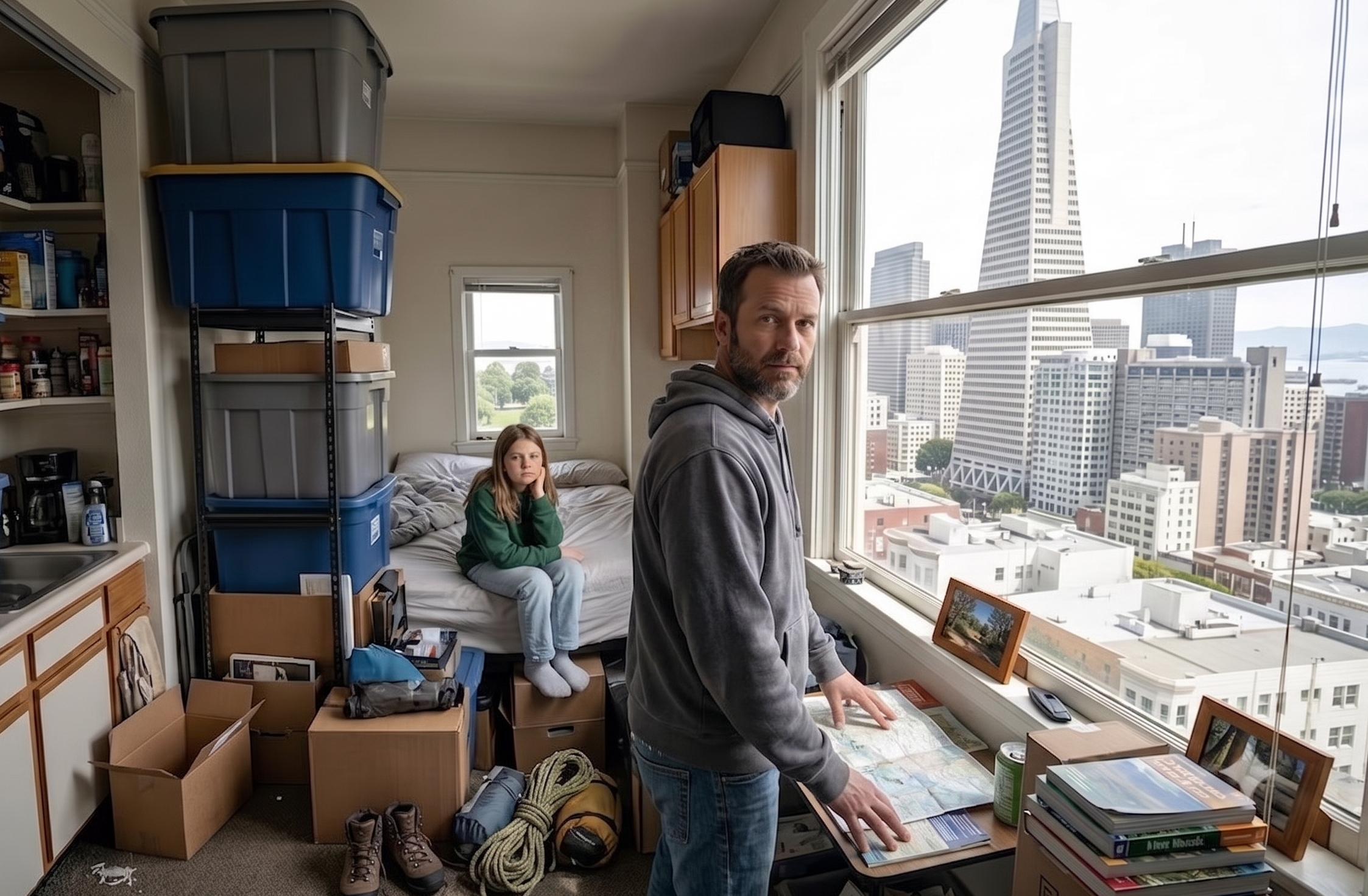
“I just want to show my daughter the mountains with snow without the mountain of stress it takes to get there.”
Persona
Single father raising 9-year-old Stella in downtown San Francisco
Wants to give Stella screen-free, meaningful outdoor memories
No car, no storage, no time. City life leaves no room for it
Who is Leo
No car, no space: Never owned a car. No room to even consider it.
Nowhere to store gear: Skis and boots he'd use twice a year don't fit in a small apartment, and buying them feels wasteful.
Planning is exhausting: Car seat, snacks, gear. A hundred small details pile into one heavy mental load.
Trips cost too much: Ski resorts and eating out for every meal are out of reach on a single income.
His Pain Points & Needs
AI-Integrated Process
I integrated Figma Make, Cursor AI, Google Stitch, Gemini, Veo3, Google Flow, and ChatGPT across the entire workflow, from research to prototyping, to move faster without losing rigor.
I also benchmarked competitors during this phase. Airbnb for how it sells a feeling, not just a space. Waymo for pre-ride transparency and personalized dash IDs. Expedia for bundling and how it communicates value at checkout. Each lesson got reinterpreted for the Concordia brand.
1.AI-Driven Research & Synthesis
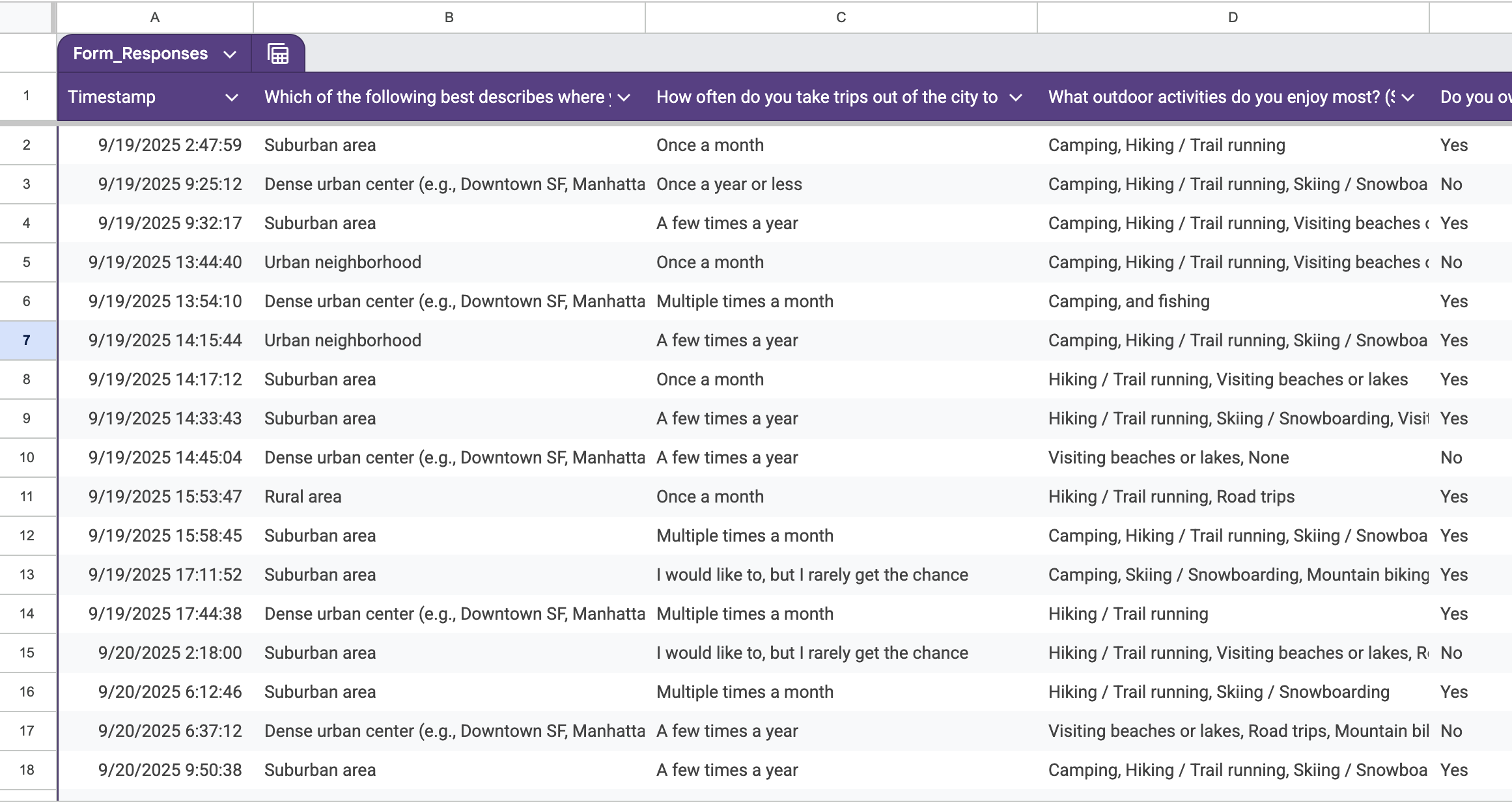
Used AI to mine both the 20-person survey and academic literature for behavioral patterns and safety expectations, grounding every design decision in evidence.
2.AI Ideation & Concepting
Synthesized those insights with generative AI to architect the Harmony AI ecosystem, including a zero-search rental framework and multi-user & multi-modal interaction models.
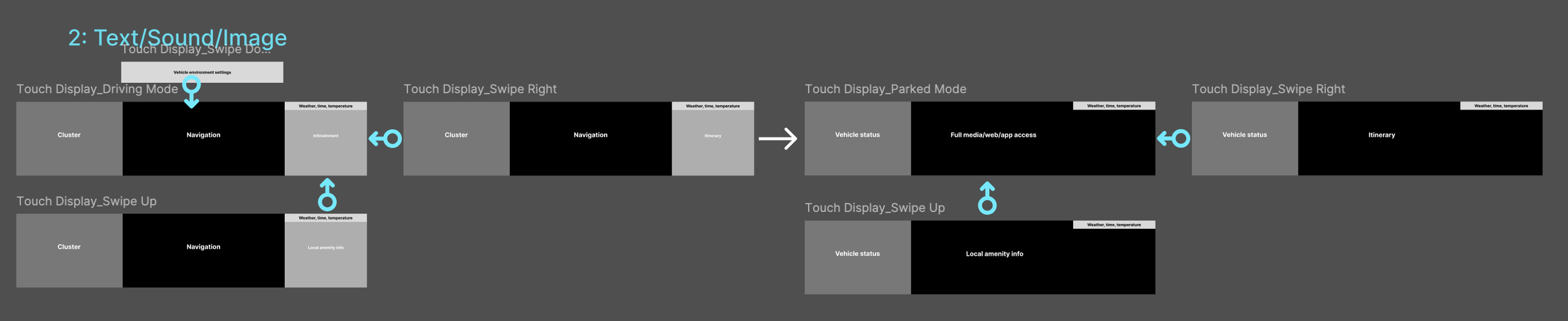
3.Contextual Prototyping
Built out sitemaps, user flows, and lo-fi wireframes in Figma, then iterated into high-fidelity utilizing AI-assisted prototyping tools like Figma Make and Cursor. Completed nine MVP flows total.
Design Decisions
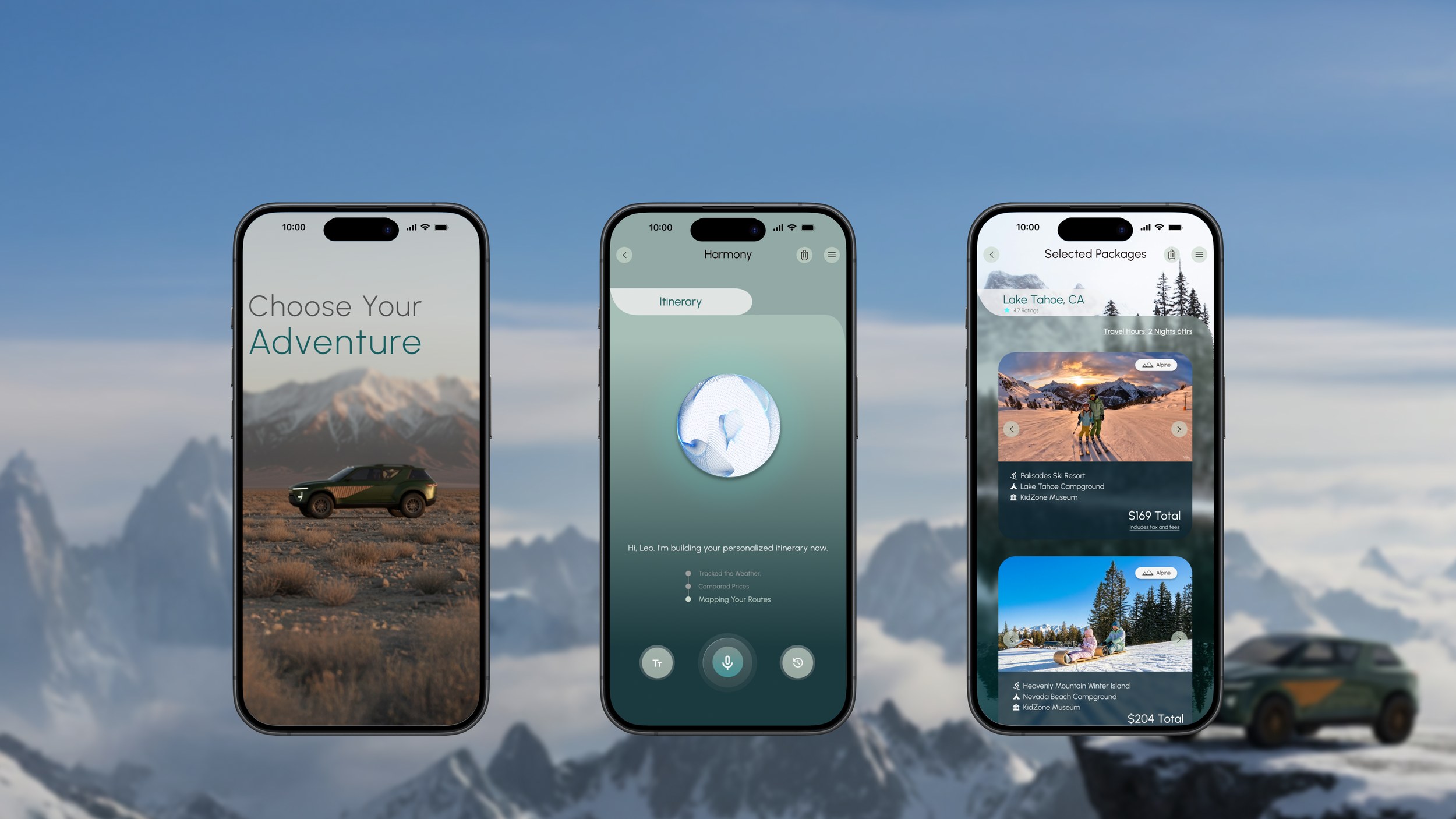
1.Harmony AI mobile app: One app, all-in-one rental package
Context-aware, AI-assisted booking. Tell Harmony you're traveling with your kid once, and it remembers, then plans destinations, itineraries, and gear around them every time after.
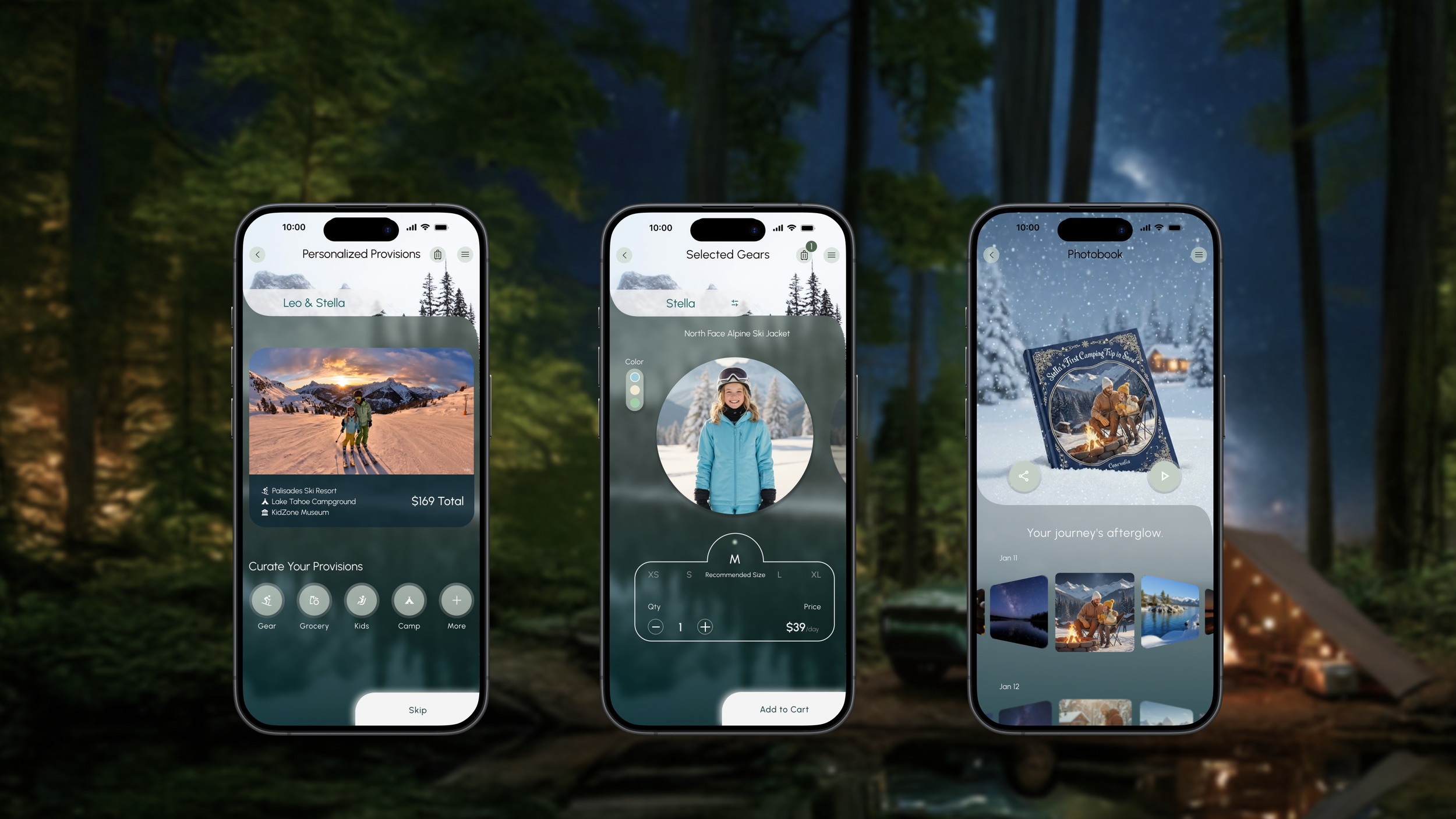
2.Harmony AI mobile app: Rent everything, start riding
Zero-Search Rental: Car, Gear, Food, and Tickets Curated by Harmony AI, with Memories Delivered Post-Trip.
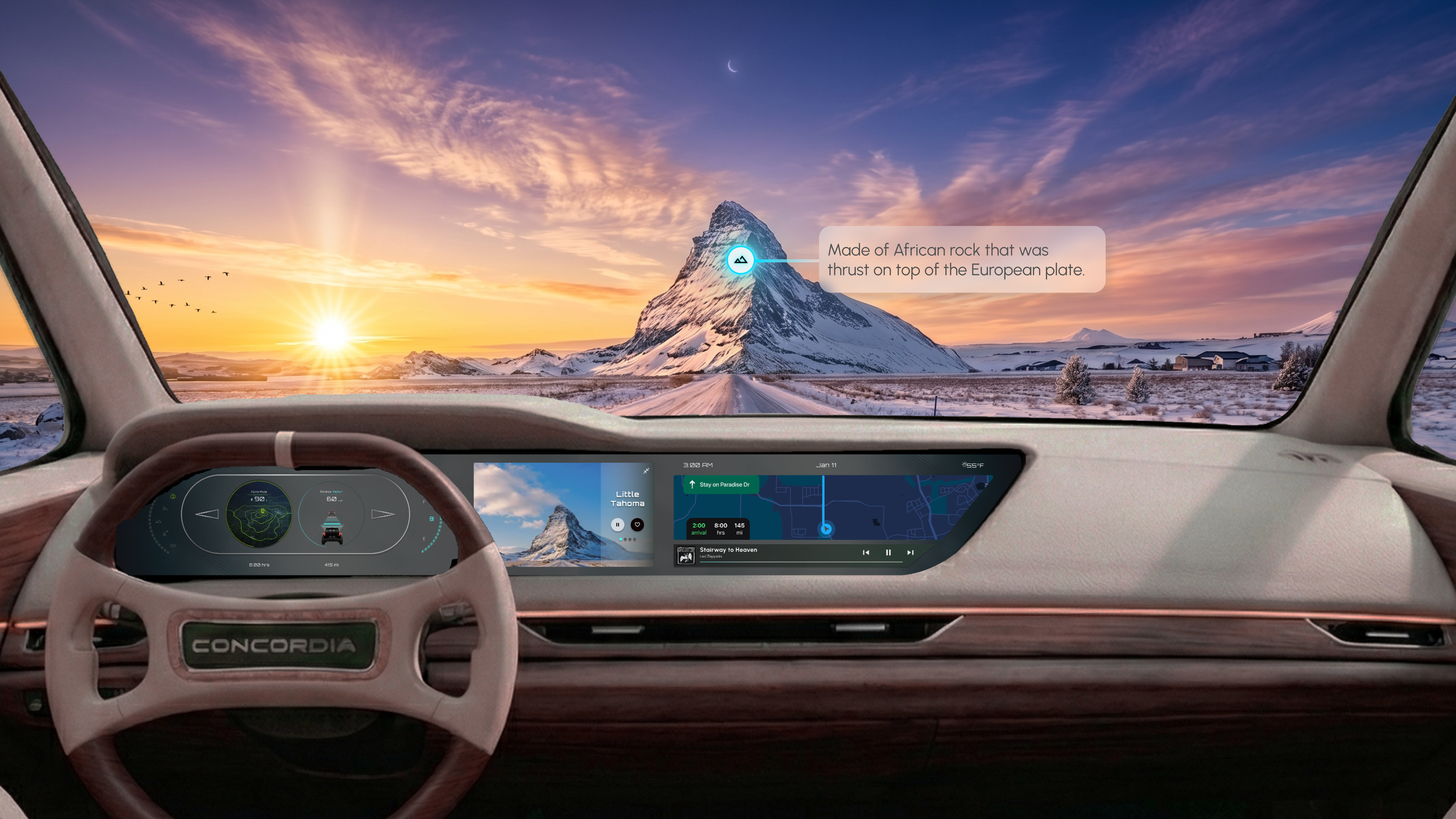
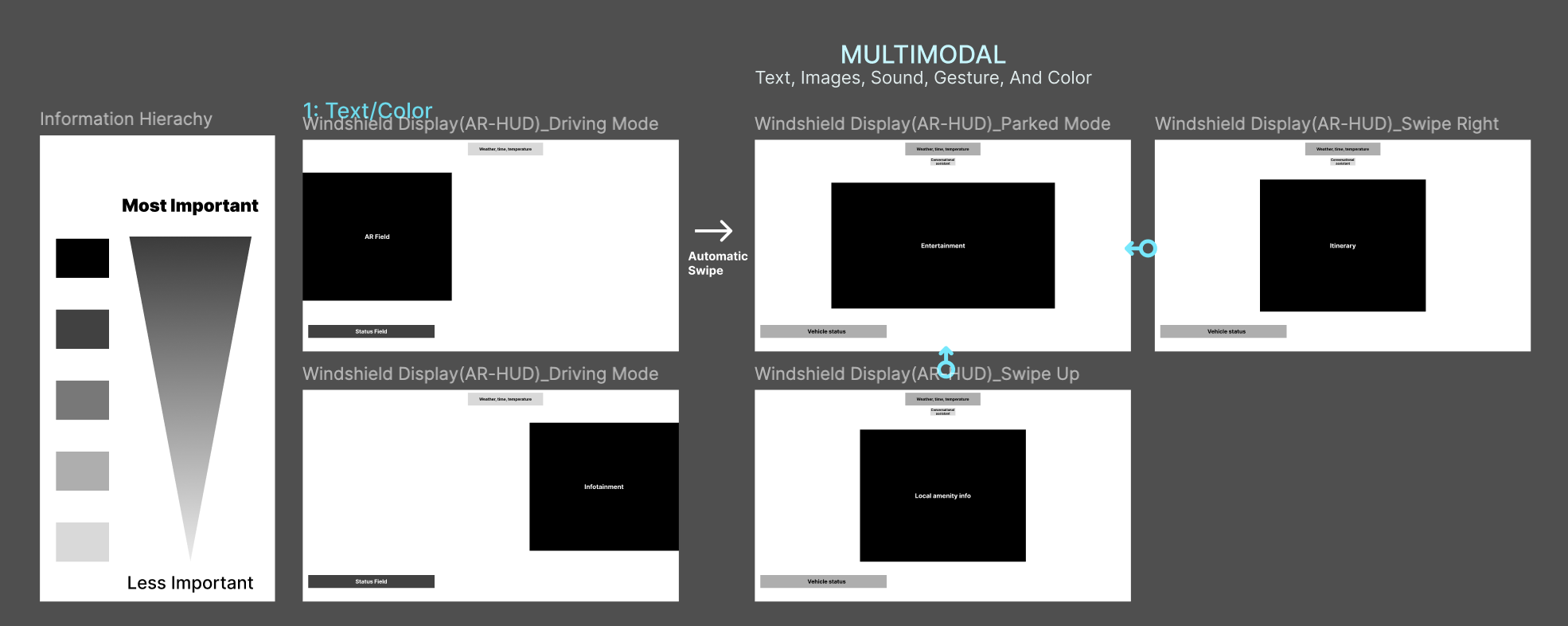
3.AR Windshield HUD: Listen & Learn, AR HUD Sync.
Unlocking hidden live regional data and silencing the urban noise via immersive AR HUD. Harmony AI will pick appropriate and customized narrative tone to deliver it unique indiviuduals.
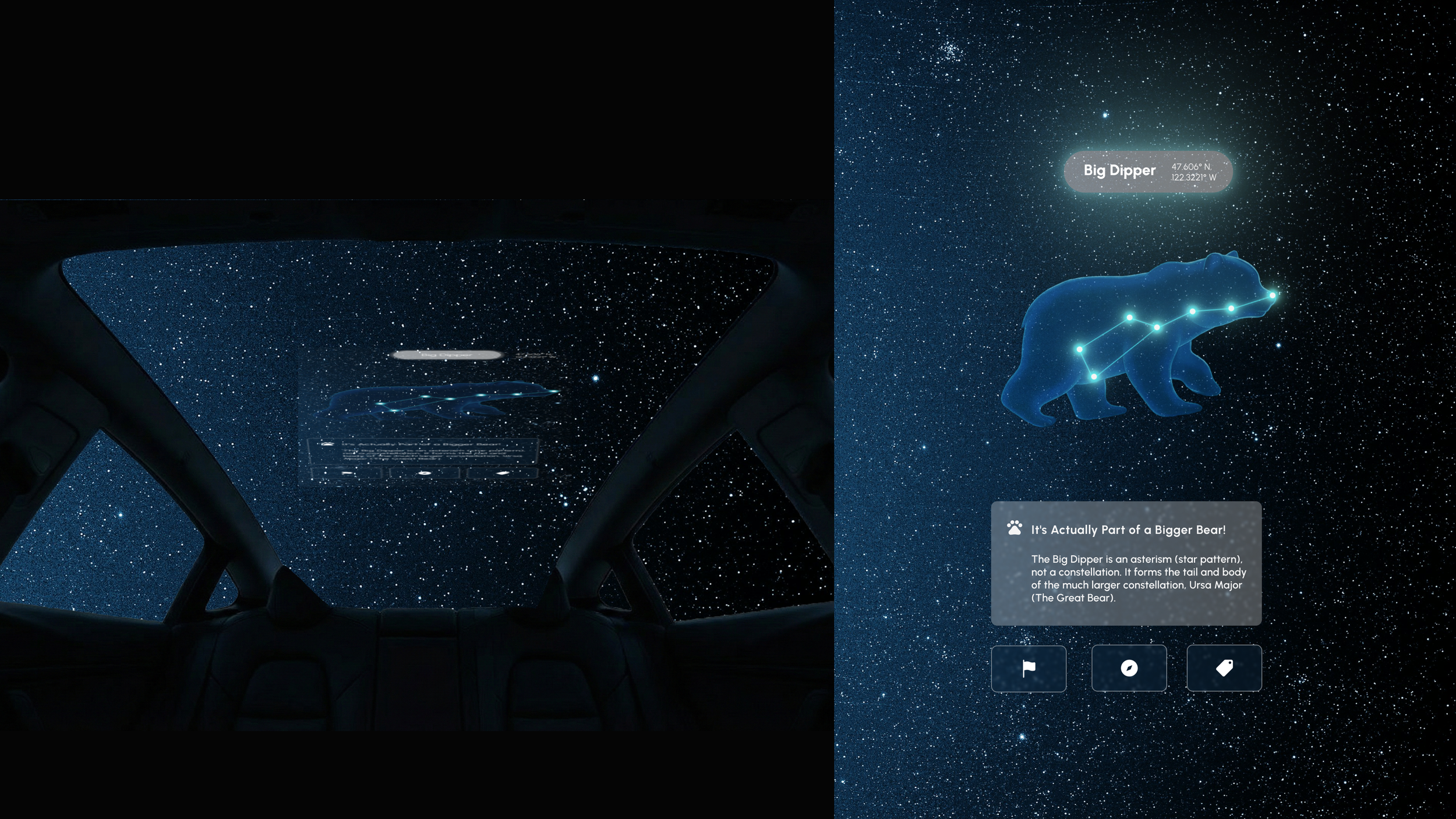
4.AR Sunroof: Look up, touch stars
Turning constellations into an age-appropriate stories while the panoramic interface reacts to your curiosity and touch.
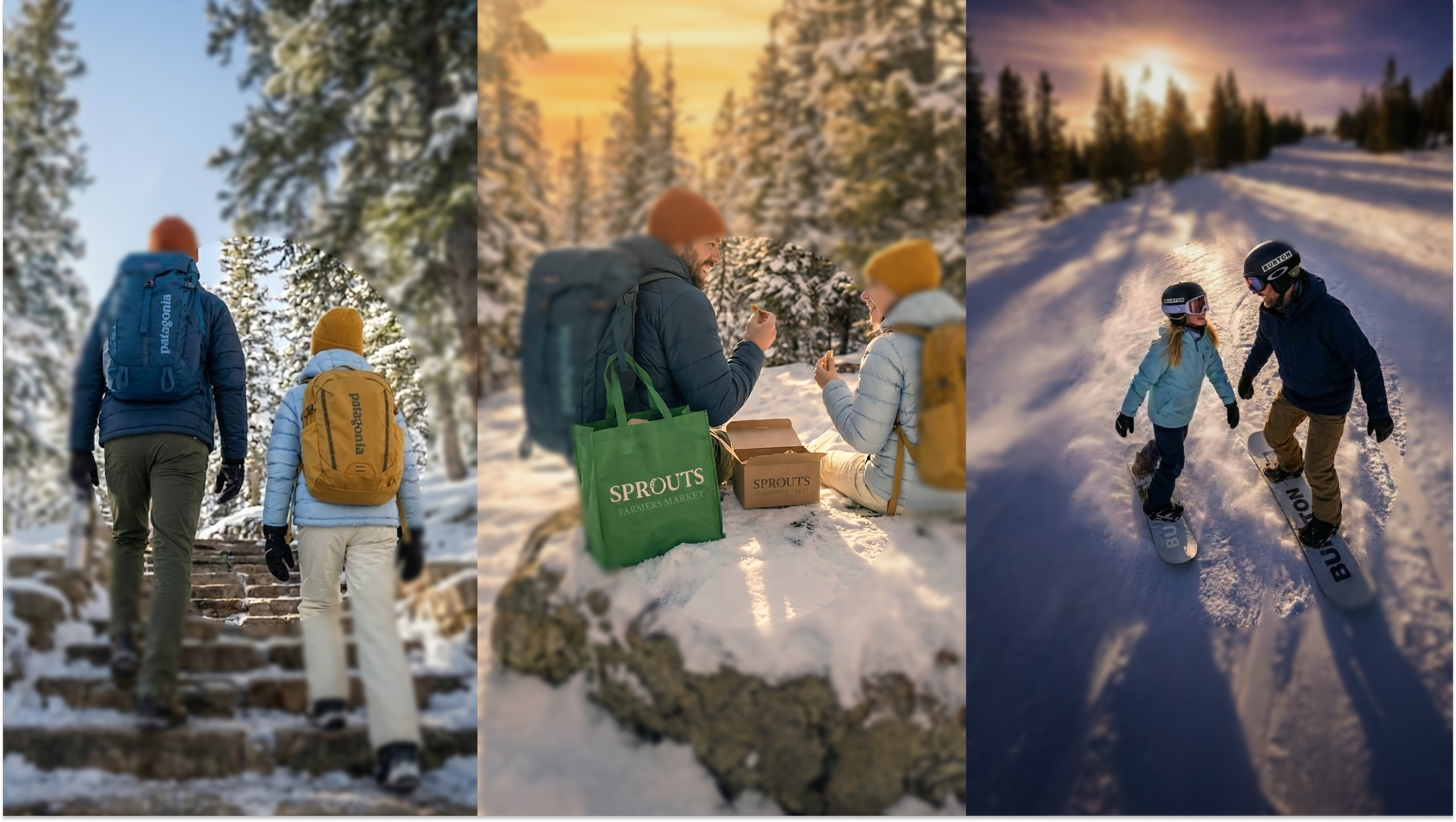
5.B2C + B2B Hybrid.
Two Revenue Streams, One Ecosystem: Adventurers rent directly through Concordia, while outdoor brands, gear, food, and ticket providers partner to pre-load every vehicle, creating a zero-search experience from a single booking.
I was the only UX/UI person on a four-person team, running Harmony's app, dashboard, and AR systems solo while my teammates kept pulling toward polish over research. Every week meant defending the same thing: build what solves Leo's problem, not what looks good in a reel. Faculty eventually had to step in and make the case for me. What stuck with me wasn't the disagreement, it was learning that a good decision and a decision your team actually follows are two different jobs.
Team & Leadership
Feedback & Iteration
The project changed shape more than once. Andrew became Leo, a single dad, because that's who actually feels the storage problem. "Don't over-explain," Antonio said about our storyboard, so we cut the repeat scenes for a cricket sound and a board game glimpsed through a window. Harmony went from answering Leo's questions to asking them first.
I set out to build a car. What I actually built was more time for Leo and Stella, less time lost to planning, and more of it spent together. That's the whole point of Concordia: less screen, more each other!
Two things I'm taking with me. A feature only earns its spot if the research backs it up. And convincing a team to follow a good decision takes a completely different skill than making one in the first place.
Reflection
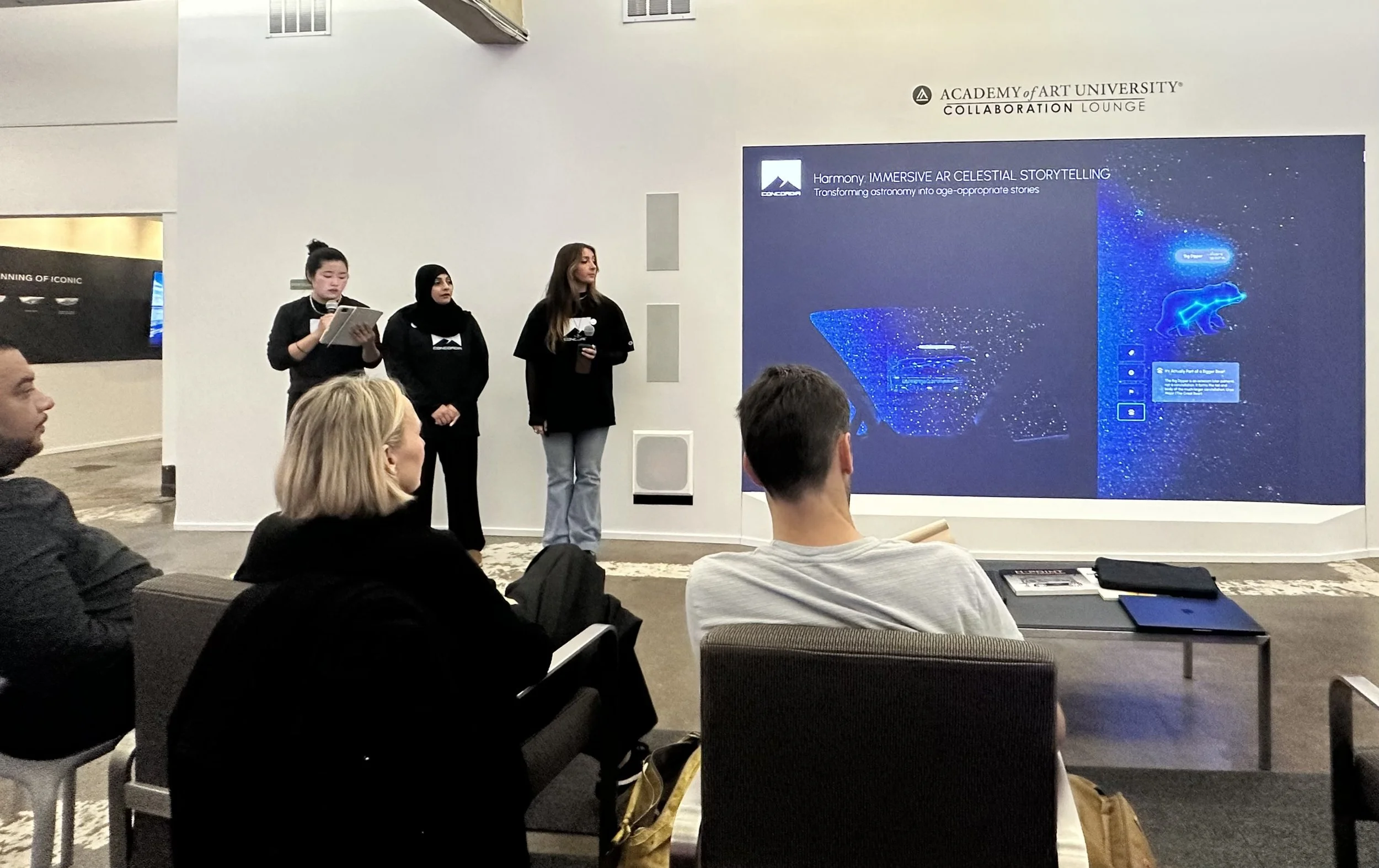
Autodesk Presentation Day
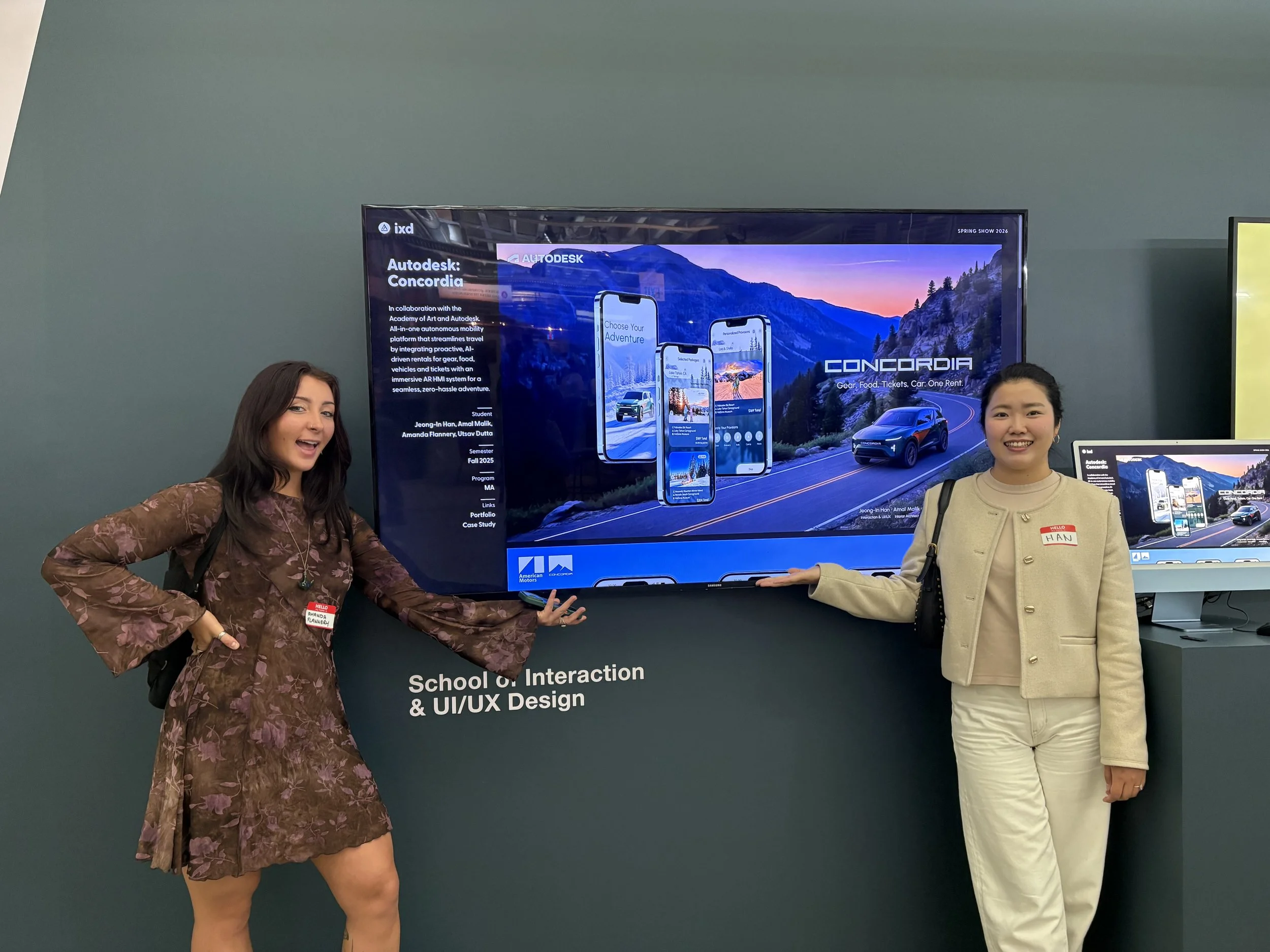
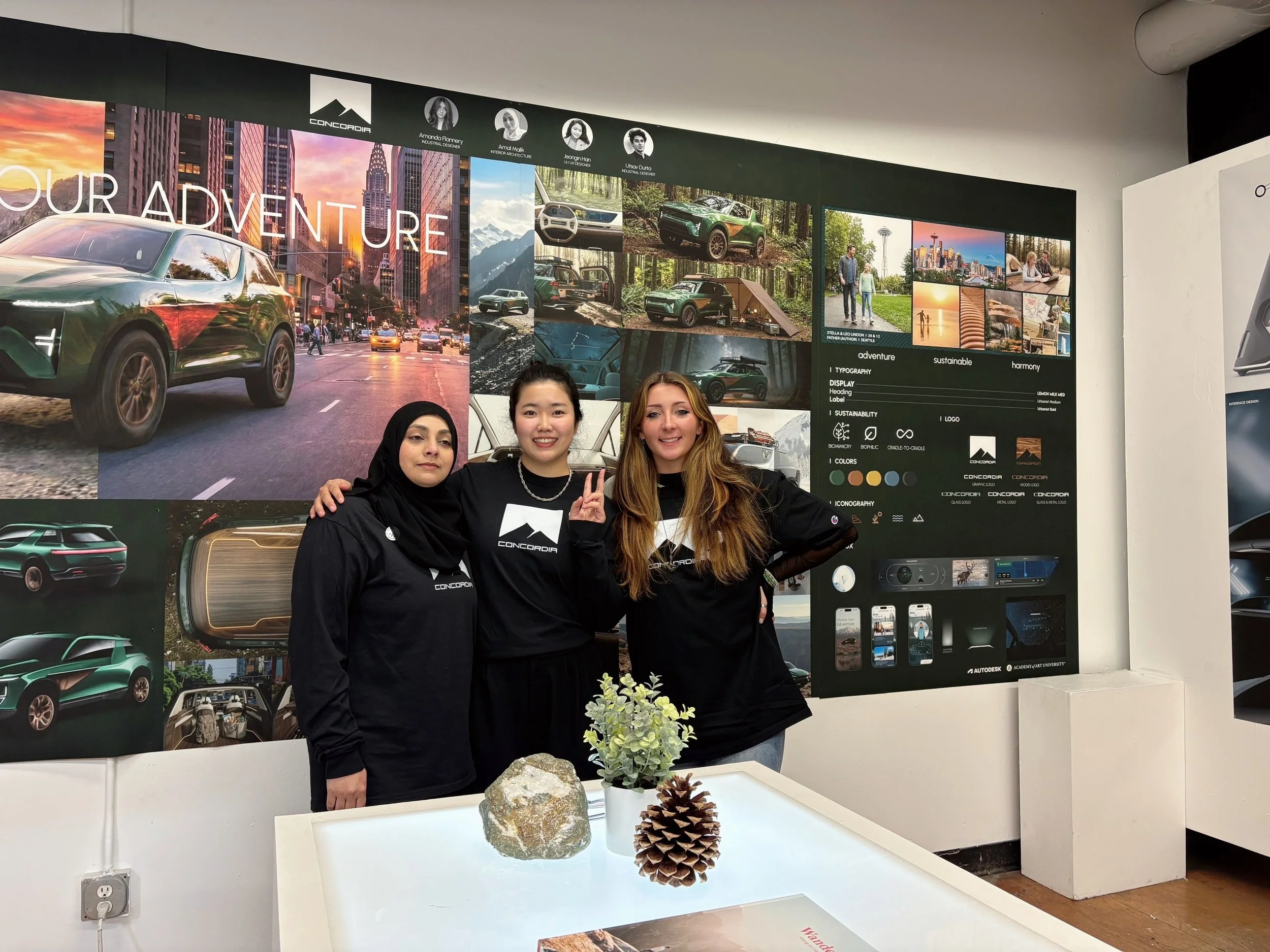
Group photo wearing Concordia custom t-shirt with my team in front of our boards