


Scaling a Brand from 0 to 1.
End-to-end product design and merchandising strategy driving 35% revenue growth.
Role
Product & Brand Designer
Shopify (Custom CSS), Figma, Adobe Suite, Generative AI, Analytic
Timeline
60 Hours
User Test Success Rate: 42% to 77%
Increase in Revenue: 35%
Positive User Feedback: 9 out of 10
Key Metrics
Tools
Table of Contents
The Challenge
Turning Instinct into Infrastructure.
“I want a brand that feels curated and private,
not just another viral store. But we still need to sell.”
– Founder Interview
01
Ambiguous
Audience
Moving from "hunch" to data-backed user profiles.
02
Niche vs
Revenue
Designing for exclusivity while optimizing for conversion.
03
Technical
Execution
Building a trust-based UX for a non-technical team.
User Research
Uncovering Barriers to Purchase Via User Interviews.
-
Problem: Users struggled to perceive the "quiet value" of the curated pieces, viewing them as merely "used" rather than "historical" without the backstory.
Strategy: Engineered a "Narrative-First" structure that presents the cultural history before the product grid, ensuring users understand the value before seeing the price.
-
Problem: Beginners couldn't distinguish high-value vintage from used clothing.
Strategy: Establish authority by highlighting the founder's background as a Senior Designer at Ralph Lauren & Banana Republic to guarantee curated quality.
-
Problem: Users hesitated to buy from an unknown site due to fear of scams.
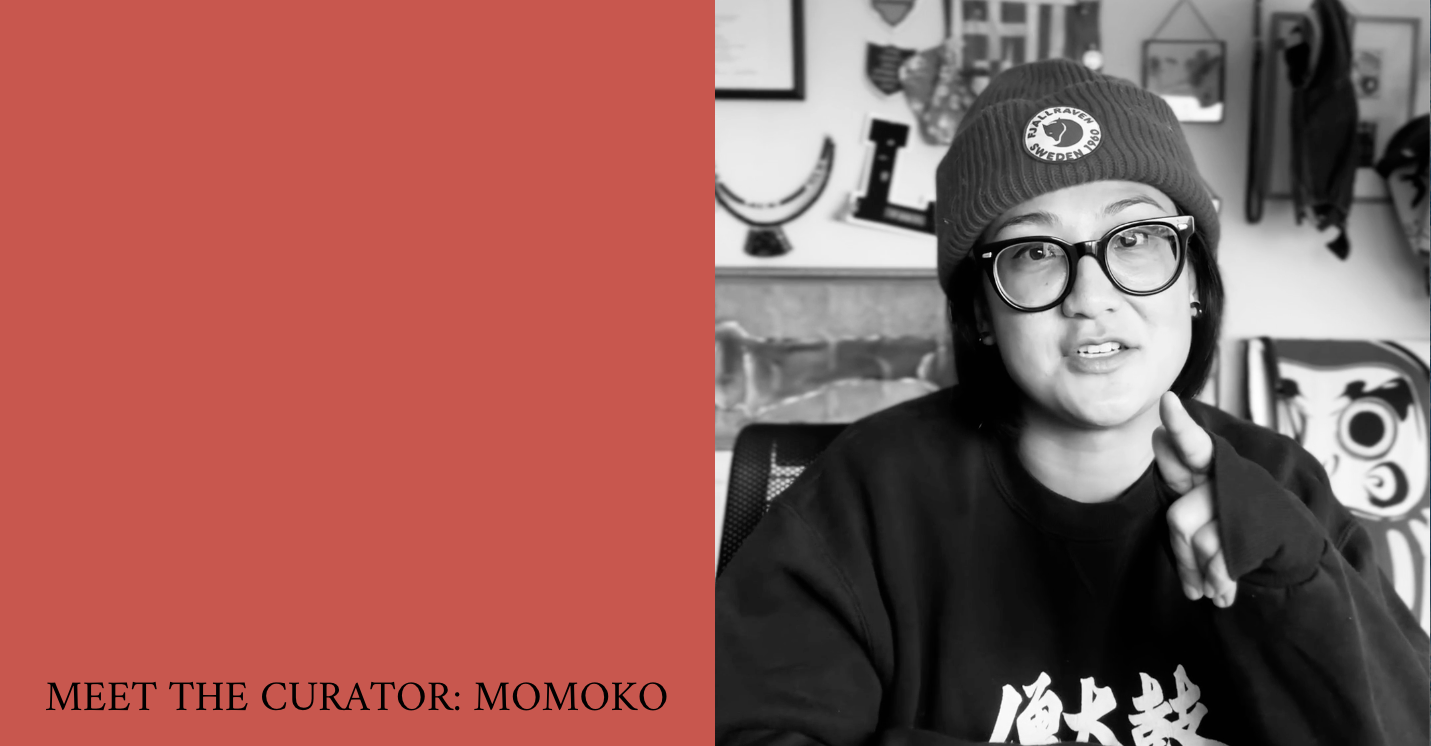
Strategy: Bridged the trust gap by "humanizing the brand" with the founder’s face and story on social media, while reinforcing expertise through a monthly zine (newsletter).
Merging content and commerce without friction.
Information Architecture
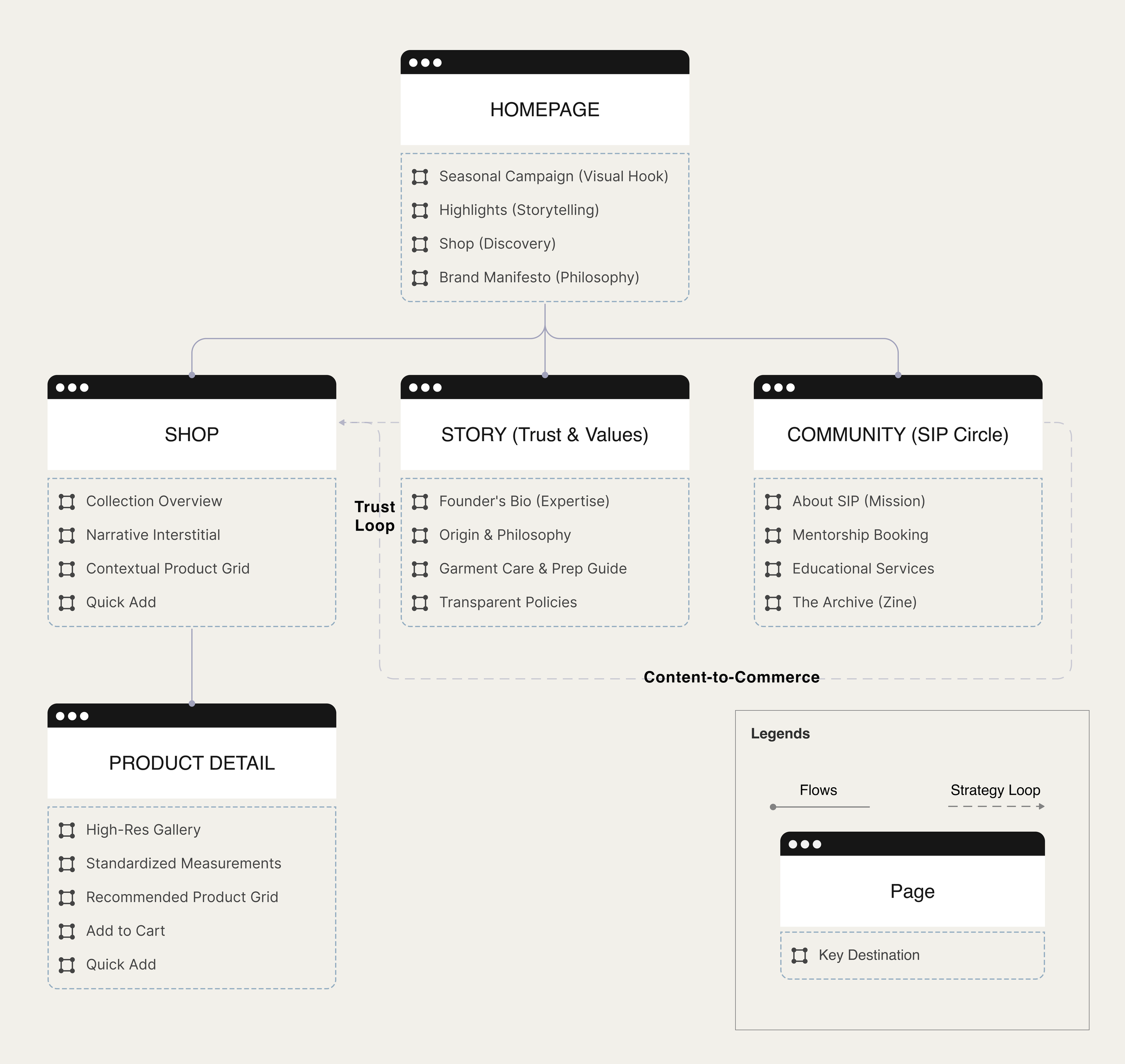
Experience that merges the thrill of vintage hunting with the reliability of modern e-commerce.
The Solution
01. Narrative-First Architecture Solving the "Context Gap"
I disrupted the standard e-commerce pattern to bridge the gap between "Quiet Value" and user perception. Instead of a chaotic product grid, I engineered a linear narrative flow. Users engage with the history (Zine) before the inventory, transforming the mindset from "browsing used clothes" to "acquiring history."
02. Authority Signals Solving "Value Perception"
Beginners often struggle to distinguish "High-Value" from "Used." I designed dedicated interfaces to visualize the Founder's Pedigree and Transparent Care Process. Placing these details at the forefront shifts the user's perception from "risky second-hand" to a "curated archive."
03. The Trust Ecosystem Solving the "Fear of Scams"
To overcome the hesitation of buying from an unknown site, I visualized the brand as a living community. By integrating SIP Circle (Community) and Transparent Policies directly into the navigation, the design proves there are real people and systems behind the screen.
Impact
Defining Success: Proving the Value of "Slow Commerce"
-
Higher Sell-Through Rate: The "Narrative-First" strategy validated that context drives commerce. By educating users on the history before the purchase, most curated drops sell out 35% faster, proving that users are willing to pay for the story, not just the product.
-
Zero Disputes: Despite the strict "All Sales Final" policy, the platform maintains a 0% dispute rate regarding item condition. The "Authority Signals" (Founder's Pedigree & Care Guide) successfully shifted value perception, giving users the confidence to purchase 'final sale' items without hesitation.
-
Industry Recognition & Partnerships: The "Trust Ecosystem" successfully elevated the brand from a retail store to a cultural hub. Inquiries for the SIP Circle have surged, leading to direct invitations for the founder to mentor at fashion schools. This proves that the platform successfully established deep trust and expertise beyond simple commerce.
Takeaways
The Power of Slow UX: Designing for friction in an era of speed.
In standard e-commerce, speed is the goal. However, I learned that requiring users to read the historical context before shopping served as "intentional friction" that actually increased desire. I distinguished this sales-driven layer from the Zine, which functions as a locked monthly newsletter solely for retention. This separation allowed me to design two unique flows. One educates new buyers for immediate conversion, while the other rewards loyal subscribers for long-term community building.
01. Friction builds value, exclusivity builds loyalty.
The success of the SIP Circle proved that digital products don't exist in a vacuum. Designing the connection between the website and real-world mentorships taught me that a product designer must also be a Service Designer, considering the entire lifecycle of the brand experience.